
Prague Cafes: Going Local vs Playing Tourist

2012.jpg

As far as truly ‘local’ activities go, relaxing with a book or a laptop and slowly sipping coffee in a café surely ranks near the top. Yet very few travelers allow themselves the luxury of spending time doing next to nothing in a café. There are simply too many other things to do and see. Therefore, kicking back in local cafés becomes something of a guilty pleasure for many. As much as I love to see people checking one sight after another in Prague, I have to confess that it also makes me a bit sad because relaxing in a café provides some unique insights into the local culture and should be something you do in between sights.

Luckily, there is a strong coffeehouse culture in Prague, and the city’s historic cafés have long been included among the must-sees. Almost every guidebook features top traditional coffeehouses, and if you google ‘Prague's Best Cafés’, you will get a lot of advice on the ‘best’ cafés.

However, this also means that cafés that once oozed with local atmosphere now hardly have anything to offer beyond  their history and their polished wooden floors, big picture windows, and unique interiors. And because these places are crammed with guidebook-carrying tourists, the waiter tends not to care if you are coming back. Ordering a cup of coffee in these establishments can be a huge mistake and the locals have moved on, and so did the atmosphere that made the cafés so appealing in the first place.

The Cafe Slavia, the atmospheric The Cafe Louvre and the only Cubist-style coffeehouse in the world, Grand Cafe Orient, are three examples of cafés destroyed by tourism. Established in 1863, Cafe Slavia became a meeting place for artists and intellectuals – it’s regular patrons once included Franz Kafka, Rainer Maria Rilke, Jaroslav Seifert and the composers Smetana and Antonin Dvorak. Today, it is packed with tourists hunting for pictures of beautiful Art Deco architecture and the astonishing views of Prague Castle.

Cafe Louvre is another café of this kind. The Parisian-style café with a billiard hall is part of the First Republic's heritage, and its famous patrons included Albert Einstein, Karel Čapek and Franz Kafka. However, the combination of crowds of tourists, coffee of poor quality and disinterested waiters makes me pass this establishment by without any regret.

The Grant Café Orient is another remnant of the past. However, for a rare chance to see cubist architecture up close, I recommend that you enter the fabulous geometric balustrade and climb the teardrop-shaped stairwell to the Grand Café just to see the really beautiful interior with many interesting details and a narrow terrace. Do not order anything, just look.
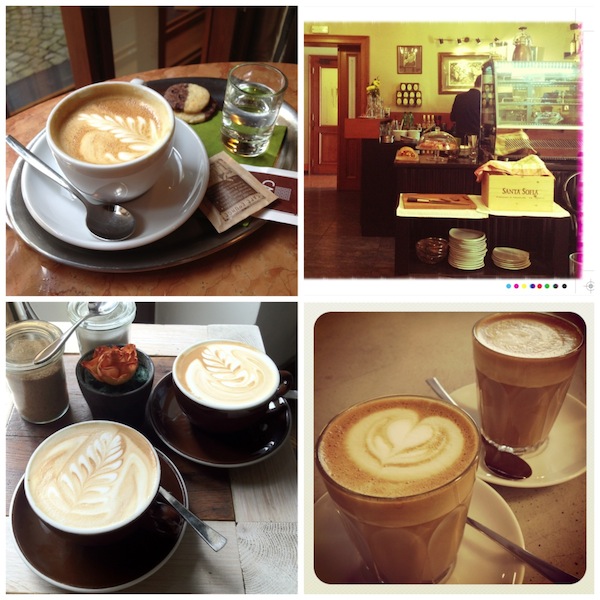
Two traditional cafés that we still like (although we would not order coffee there) are Café Imperial and Café Savoy. The former is an Art Deco gem with ornate mosaic and tile-covered interior. Ask for some Czech classics such as Braised Veal Cheeks or Marjoram Braised Lamb Shank and observe the steady stream of local businessmen and ladies, all wearing smart suits, having their lunch. The latter is a charming little spot to for a rich breakfast before a stroll around the Petrin Hill.
So, what are the atmospheric local coffee shops I want you to discover and spend some downtime in? My first-choice café is Al Cafetero. This small, non-smoking, family run café is true coffee lover’s paradise. The owner will be your most accommodating host, offering samples, souvenirs and a friendly chat. Try the delicious, awesome-tasting coffee made from a vacuum pot, but be prepared to be offered neither milk nor sugar with your coffee.

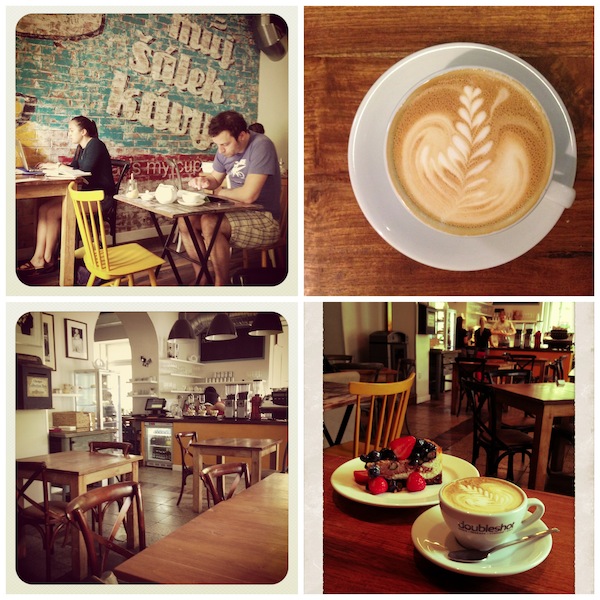
Můj šálek kávy ("That's my cup of tea") - This place is what a coffee shop should be: great coffee, good atmosphere, nice staff, convenient hours and it a really ‘local’ vibe. 

The baristas turn out some of the city's best espressos and drip coffee. You can stop by for breakfast in the morning, for a tasty lunch in the afternoon, or just sit down with your book/newspaper/laptop after dinner and catch up on your reading.

Café Lounge - This Malá Strana spot combines elegant interior (formerly a residential apartment) with nice food, friendly service and good-quality coffee. You can easily spend hours here reading, talking or just looking around and sipping some gorgeous Moravian wines. Besides, it is a non-smoking café with a lovely garden.

Dům kávy is a perfect place to purchase premium coffee beans, coffee makers, grinders, espresso machines, etc. Although more a shop than a café, Dům kávy serves one of the best cappuccinos in town.

What I like about these five cafés is that despite their appealing atmosphere, locals still far outnumber tourists, the coffee is great, the staff is friendly and reliable, and the cafés are still what they should be – places to linger over coffee rather than take photos. And I hope that doesn’t change.


Dirty Tricks of Czech Exchange Offices

Prague is one of the most beautiful places on the planet - there's no doubt about that. The "city of thousand spires" offers innumerable sights and unparalleled views. However, its image is soiled by a few problems whose resolution has long been overdue. As part of the service we offer to incoming tourists, we believe it is our duty to point these problems out and to warn you about them. Exchange offices in Prague are one of these problems.


Savor Moravian wines and traditional food at wine harvest festivals

The Czech Republic is so much more than just Prague. Sadly, only few tourists ever venture out into the beautiful Czech and Moravian countryside, passing their time only in Prague, save for the occasional visit of the nearby Karlštejn Castle. Although there is nothing wrong with that, to actually get to know the Czech Republic, or any other country for that matter, you must leave the “big city" behind and explore smaller towns and the countryside.


Hospoda, a Piece of Prague in New York City

One of the goals of this blog and Taste of Prague in general is to promote Czech cuisine. We will often write about Prague restaurants and food-related events in the Czech Republic, but we think it is our duty to promote our national cuisine abroad, too, and let you know where to get a... ....ehm... ...taste of Prague... near you. Well, if "near you" includes the New York City, now you have a great chance to do just that.


24 Hours: See the best of the city in just one day

20130203-IMG_0839.jpg

In just one day, you'll get a mere glimpse of Prague, but beware: it will surely whet your appetite for more, and you may have to extend your stay in the end!

Historic building around every corner, spires in almost every view – sightseeing in central Prague can feel overwhelming at first. But Prague is a wonderful city to stroll around (if you don't mind the cobblestones). Take time to wander down its narrow streets, savour every mouthful of delicious food and every sip of great beer, but - most importantly - resist the temptation to follow the crowds of tourists and sightseers. Our advice to anyone who finds him or herself with 24 hours to spare in the Czech capital is to stop, breathe, appreciate, indulge and maybe try some of these ideas.

Start the day with the Prague Castle, the most noticeable and impressive of Prague's landmarks. Come early in the morning and enjoy the place's history without hurry. Take a leisurely wander around Hradčany (If you're facing the castle gates, go to the left, follow the gardens and castle walls and then pass the square until you get to some smaller streets. Wander around, be sure to visit Nový Svět, don't miss the tiny pink house at the end of that street) and look up for impressive architecture without fear of bumping into other tourists. Secreted in a valley that used to be the northern moat of the Prague Castle is a pedestrian tunnel linking deer gardens on either side of the Powder Bridge. This simple 2002 creation by architect Josef Pleskot of AP Atelier is off the beaten track and all the better for it. Halfway through the tunnel is a niche with the remains of the preserved foundations of the original Renaissance bridge on display. Move up the moat's slope to the plateau, where you find Eva Jiřičná's first building in Prague, the Orangery in the Royal Garden.

Walk down the Petřín Park, former vineyards, a beautiful collection of lawns, orchards and pavilions, and treat yourself to breakfast at Café Savoy. Sit at a window table overlooking the leafy square outside and order one of several all-day breakfasts (we recommend Savoy Breakfast with a juicy portion of Prague ham served with horseradish and grain mustard. Tip: Book a table in advance and save place for dessert).

After the breakfast, take the 12 tram for a trip past the sites of Malá Strana and on towards the Holešovice district and the DOX centre for contemporary art, which has the potential to kick-start the gentrification of the northern part of Holešovice. David Černý's famous Entropa sculpture was shown here in early 2010, with further edgy shows soon following in its footsteps. Unless you had a coffee at the centre's roomy terrace, visit arguably the best coffee house in Prague, Muj šálek kávy (which translates as "My cup of coffee" in English) and enjoy every sip of a perfectly prepared cappuccino.

With your caffeine addiction well fed, climb up the steep Vítkov Hill and enjoy an exquisite view of Prague. Even though the austere National Memorial looks like it was build by the Soviets, it was actually completed before the Communist era. Now run by the Czech National Museum, it boasts impressive interiors, and hosts a permanent exhibition on 20th century Czechoslovak history - a great way to learn about Czechoslovak history and the life in Czechoslovakia in the past century.

Now take the subway and after just ten minutes (take the C line to the “Vyšehrad” station), you'll find the best kept secret in Prague – Vyšehrad. Situated on a rocky outcrop just south of the centre, Vyšehrad (which means “castle on the heights”) offers a stunning view looking back over the city and Prague’s ‘main’ castle. The Vyšehrad Park is a perfect spot for a picnic or a romantic walk on the winding path that offer sweeping views. The area also houses the splendid Vyšehrad cemetery where many famous figures of Czech and European culture and science were laid to rest: look for a map directory of the famous names at the entrance.

Now it's time for a traditional Czech dinner! Depending on your budget, head over to either La Degustation Boheme BourgeoiseČestr or Lokál. Eating at the former is a memorable experience, and with such impressive food and wine pairings, the real surprise is that the restaurant is yet to receive a Michelin star (we blame the biased Michelin commissioners). Tip: have a piece of smoked beef tongue with chickpea puree and pickled shallots and bear in mind that the LDBB has no a la carte menu and that each of the seven courses of the Bohemian tasting menu is preceded by its own amuse-bouche, so reserve at least three hours for a meal.

We love Cestr – this Czech Steak House reminds us so much of our childhood. Inside, the restaurant feels like a butcher's shop: clean, bright and metallic; a place you know uses only top-quality meat. Beyond the atmosphere, Cestr truly triumphs on the plate – real Czech recipes, composed of Czech ingredients and prepared by Czech chefs. Pick up your piece of meat from the menu printed on paper, folded around a cardboard "map" of cuts from a cow. Tip: splendid beef tartar, superb steaks, rich gravy, homemade fries, Valhrona chocolate cake with homemade peanut ice cream, tank beer and poppy seed buns in vanilla crème.

Lokál brings the traditional beer hall concept bang up to date. The interior features wooden wall panels decorated by graffitis and a glass bar counter housing stainless-steel barrels and cooling pipes. Do not expect fine dining, but rather “like mum used to make” food, lots of locals, low prices and great beer. Enjoy either fast and high-quality meals such as pickled cheese, headcheese or sausage made by the Dolejsi family of butchers from Davle, or bigger, regular meals like Beef Tenderloin with Cranberries; Pork, Dumplings, and Cabbage; or Roast Duck with Red Cabbage. Tip: Waiters will keep bringing you extra beer if you finish your first glass, so make sure you say "no" before it's too late.

In the evening, take a twilight cruise of the Charles Bridge. The crowds along this biggest tourist attraction begin to thin out as the sun sets. The shadows fall and the statues become silhouetted by the remaining light. It’s a magical place to be at this time of day. Make sure that you spend some time on Kampa Island, which is just off of Charles Bridge. Walk through the park and enjoy the view of the bridge and across the river.

And finally, there's no better place to end the night than in one of Prague's bars. Go to the Hemingway Bar and try Absinthe with cold water dripped over a sugar cube into the drink (that makes it significantly more palatable) or head to a small, very pleasant Vinograf Wine Bar and discover wonderful Czech wines.

Have a wonderful stay whatever you are up to and remember: stop, breathe, appreciate and indulge.

What are your tips for getting the most out of the city?


Tipping in Czech restaurants

When you travel abroad, getting the local customs right can get tricky at times. This includes the rules of tipping in restaurants - every country and every culture has its own rules, and you want to get them right (or at least I do). Recently, Zuzi and I visited France and, more specifically, the Basque Country, and I must say we found the tipping rules quite confusing: you have to look in the menu or at the bill to see whether the tip has been already included, and then the recommended amount of the tip is not always clear - we were told it was 15% in a Michelin-star restaurant (the very lovely Briketenia, highly recommended both for the views and the food, although we found the delicious desserts to have slightly overpowered the courses that preceded them), but someone else suggested that a lower tip was more common. So what should you do to tip like a pro in the Czech Republic?

The smartest Prague food tours. Cool rental apartment. Awesome pocket wifi device. We’ll turn your Prague trip up to eleven.

Book a tour Get the guide Rent the apartment Rent the pocket wifi

To your luck, the tipping rules in the Czech Republic are pretty straight-forward. Here are the main rules and some additional tips:

  • The bill that you get for your meal does not include tip, which is paid extra. Tipping is not mandatory but is very common. You should refuse to give a tip only if you've been truly dissatisfied with the service - when you don't tip at all, always tell the staff why.
  • The usual tip amounts to about 10% of the bill, but you can give more if you're truly happy with the service, or less, for instance if you're happy with the food, but not some much with the service. When I talk about 10% of the price, I mean the price of the food ordered. If you order a EUR 100 bottle of wine, you don't have to give a EUR 10 tip for the waiter opening it.
  • If you pay with a credit card and use the payment terminal, ask whether you can include the tip after you confirm the amount of the bill. Some terminals let you confirm the bill and THEN ask you for a tip, but other terminals lack that option, which will leave the staff without a tip if you have no cash on your hands.
  • A "pro" tip: When the Czechs pay their bill, they give the money to the waiter and inform them of the total amount of the bill they wish to pay, including the tip (e.g., when your bill is CZK 800 and you want to give a CZK 100 tip, you hand out a CZK 1000 note to the waiter and say, with confidence, "nine hundred"). The waiter will take the money, and give CZK 100 back, i.e. withhold the tip right away. If you're not comfortable with this, the usual procedure can be used, too - just let the waiter give you the exact change and then leave the tip on the table.
  • Beware of tourist traps! Some restaurants in touristy locations may include the tip in the bill, and then solicit another tip. However, these cases are extremely rare.

Personally, I tend to be very generous with my tips (to the extent that Zuzi may at times express some protests against the amount) - I used to wait tables in a very popular bar/restaurant when I was a student, and I can appreciate how difficult the job is. But the final tip is really up to you. If you're satisfied, 10% is fine; if you're not satisfied, give less or nothing (and contact us for tips on where to go for your next meal).